
Under INTEXPaL Project: Workshop Connects Training with Fashion Industry Needs
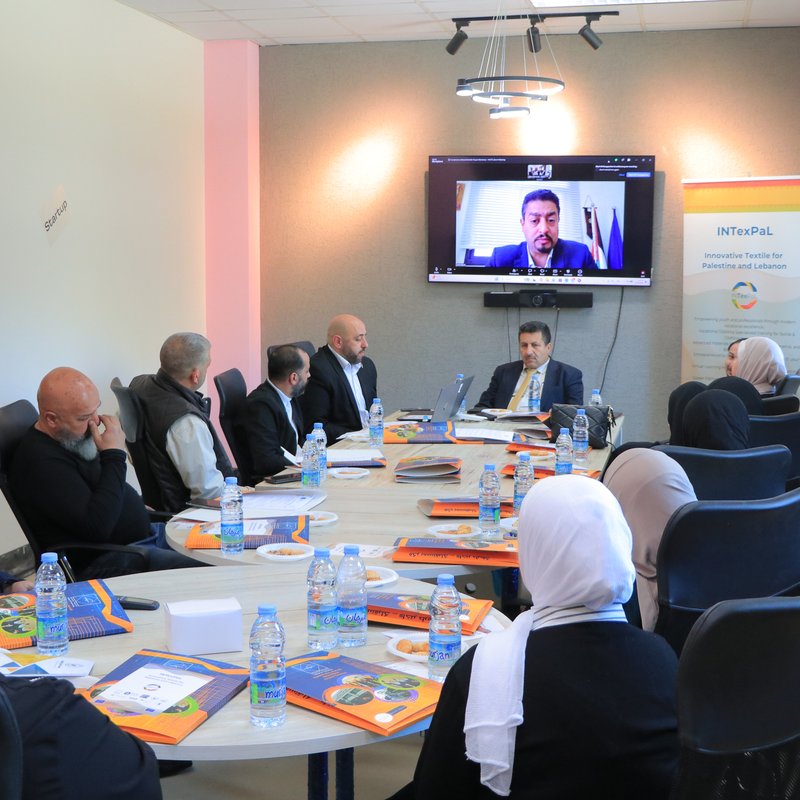
Hisham Hijjawi College of Technology Strengthens Collaboration with the Private Sector to Advance Skills in the Fashion and Textile Industry
Hisham Hijjawi College of Technology organized a stakeholder workshop in collaboration with private sector representatives under the framework of the INTEXPaL project, funded by the European Union, titled:
“Bridging Skills and Industry Needs”, held on Thursday, April 23, 2026, at Darzeh Hall – Fashion and Design Innovation Hub in Nablus.
The workshop aimed to strengthen partnerships with stakeholders in the textile and fashion industry and to identify labour market needs, with the goal of enhancing Technical and Vocational Education and Training (TVET) programmes and aligning them with the ongoing digital transformation in the sector.
The event was officially opened by Dr. Amer Massad, Dean of the College, who emphasized the importance of strengthening collaboration with the private sector to enhance the quality and relevance of TVET programmes. He highlighted the College’s role in preparing qualified graduates capable of meeting labour market demands. The workshop also featured the online participation of Dr. Amir Khalil, Director of the National Erasmus+ Office in Palestine, who underlined the importance of Erasmus+ projects in fostering innovation, capacity building, and international cooperation.
Eng. Alaa Darwish, Project Manager, delivered a comprehensive presentation on the INTEXPaL project, outlining its objectives, key components, and work packages, while stressing the importance of involving the private sector as a key partner in the development of training programmes. The workshop also showcased proposed training areas focusing on digital transformation in fashion design, including the use of advanced tools such as CLO 3D Fashion Design Software.
An interactive focus group discussion was conducted with participants representing companies and tailoring workshops. The discussion highlighted several key challenges, including the need to strengthen digital skills, enhance hands-on practical training, provide modern equipment and advanced software, and actively involve the private sector in curriculum development and Work-Based Learning (WBL).
Private sector representatives expressed strong interest in the project and their willingness to engage in its activities, including nominating staff members to participate in advanced training programmes of up to 120 hours in digital fashion design. During the session, Mr. Bassam Arafat, representing tailoring workshops in Nablus Governorate, praised the project and emphasized its importance in advancing the fashion and textile sector in Palestine.
The workshop concluded with a set of key recommendations, including the development of market-driven training programmes, strengthening practical training approaches, integrating modern digital tools, upgrading training laboratories, and enhancing collaboration with the private sector.
This workshop reflects the College’s ongoing commitment to improving the quality of TVET and equipping graduates with the skills required to meet labour market needs and adapt to technological advancements.